Mining, Yes.
But Not Sulfide Mining Near the BWCA

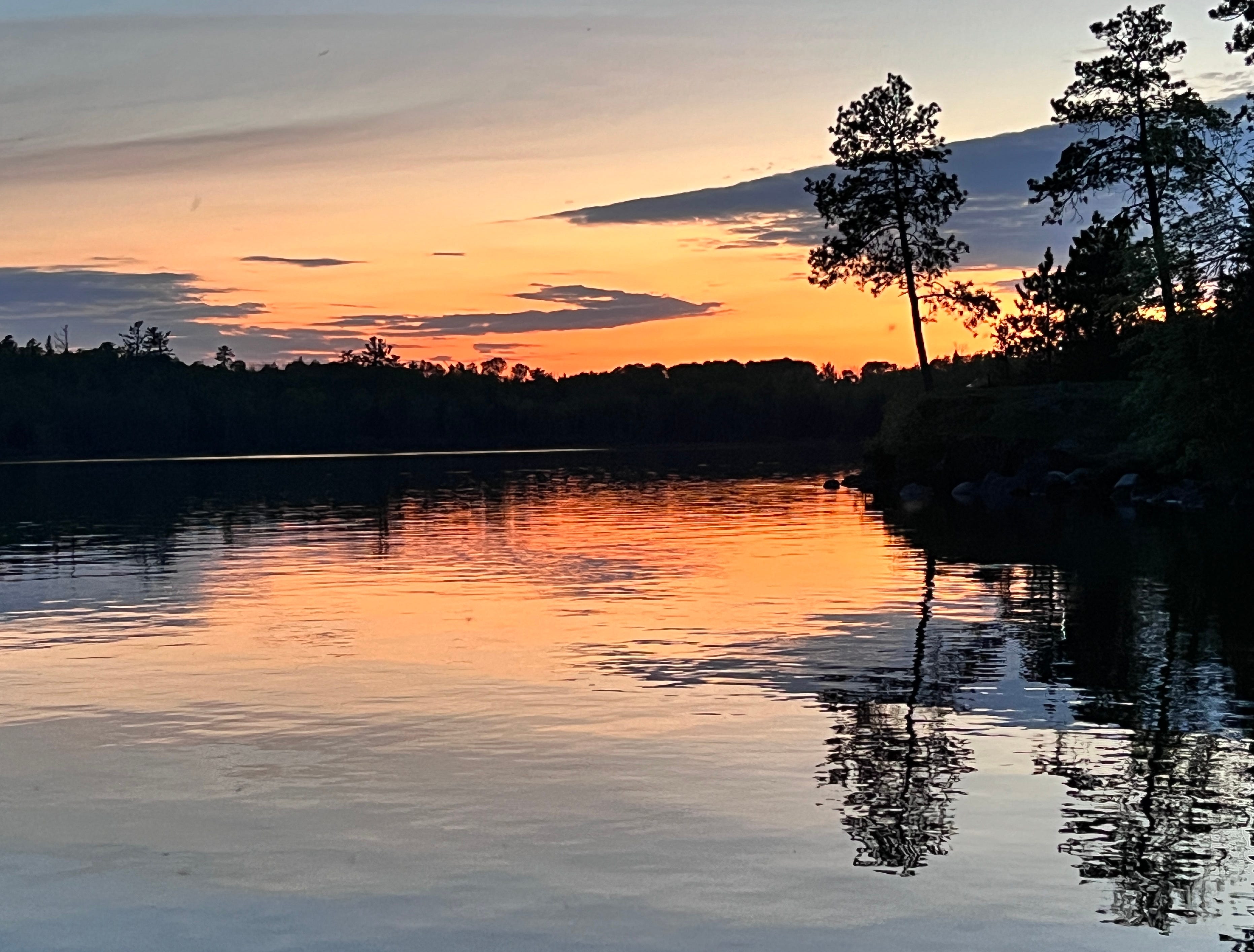
The first time I saw Northeastern Minnesota was from the remote dock of my friend’s cabin. I was 14, and my friend and I had just graduated from ninth grade. His parents bought a simple two-room cabin with a one-room guesthouse, some lakeshore lots, and a broken-down boat they called the African Queen. Their cabin was one mile from the Boundary Waters Canoe Area Wilderness (BWCA).
That day we drove eight hours from Cedar Rapids, Iowa, to a Lake Vermilion marina and crossed to their wilderness dock in darkness. Loon calls quavered in the cool night air. I had never heard anything like them. I had never seen so many stars, and I knew damn well I had never felt anything like crossing mirror flat, pristine water to an island cabin in the middle of a Northeastern Minnesota night. The Boundary Waters, I would soon learn, would become what I often refer to as my spiritual landscape.
Today, the pristine wilderness of the BWCA is being threatened by acid runoff.
On January 21, 2026, the U.S. House of Representatives voted 214-208 in favor of H. J. Res. 140. The full text is 59 words of procedural gobbledygook (which can be read at the end of this article).
In summary, the Biden Administration put in place a 20-year moratorium on copper-sulfide mining near the BWCA. The opponents of that ban are using a procedural process called the Congressional Review Act (CRA) to invalidate the mining moratorium, so the effort to mine copper in the area can move forward.
After the resolution passed the House, it was sent to the Senate on February 26, 2026, where a committee has not yet been assigned the matter. It must be considered and voted on by a committee (probably the Senate Committee on Energy and Natural Resources) before the full Senate can vote on it. CRAs can be decided quickly and only need a simple majority to pass.
There are several reasons H J Res 140 has many opponents. First and foremost, the moratorium was put in place because sulfide mining is dangerous.
Google: “Based on available research, there are no known examples of metallic sulfide mines that have operated and closed without producing pollution, particularly acid mine drainage.” Sulfide mines produce sulfide ore, which when exposed to air and water produces sulfuric acid. Acid runoff, particularly near the BWCA, could be especially problematic, given the BWCA ecosystem of lakes and rivers. The wilderness area contains an estimated 20 percent of all the fresh water in the national forest system.
To underscore and reiterate, the history of sulfide mining ensures a sulfide mine will produce acid runoff. Period. Full stop.
The company pushing to build a copper-sulfide mine is Twin Metals, which is owned by the Chilean company Antofagasta. Antofagasta has a history of environmental problems, some of which are due to sulfide mining. Recent press accounts have also indicated that the copper ore mined from the proposed Minnesota mine would be sent to China for processing. After the ore was refined, US interests would allegedly be required to purchase the copper from China.
Perhaps most alarming, Twin Metals is proposing to locate its mine approximately 2-3 miles from the BWCA’s edge, at the wilderness area’s headwaters near Birch Lake and the South Kawishiwi River. These waters flow north into the BWCA, and eventually into Canada’s Hudson Bay. In addition to sulfuric acid, runoff contains various heavy metals, including cadmium, mercury and lead. Acid mine runoff would flow into the BWCA, contaminating water, killing aquatic life and wreaking havoc on a fragile ecosystem.
H J Res 140 is being rammed through congress using a questionable legislative process for two reasons.
America needs copper. While there are huge deposits out west, the Minnesota mine is considered very large. The US imports approximately 45-57 percent of its refined copper from places like Chile, the Congo, Canada and Peru.
Most people agree that whenever possible and necessary we should leverage domestic copper resources. But today, western deposits and foreign sources are meeting America’s copper needs. Given the sizeable risks associated with a Minnesota copper-sulfide mine, we can and should continue to rely on existing non-Minnesota copper resources.
Northern Minnesota also needs jobs. The Twin Metals mine would result in an estimated 750 long-term, well-paying jobs. That said, the BWCA already supports an estimated 17,000 jobs in the recreation-based economy, including outfitters, resorts, lodges, restaurants, and more. Given the track record of copper-sulfide mines, the BWCA will suffer from pollution, potentially jeopardizing many more jobs than the mine would provide.
What’s Next?
The use of a CRA to move the Twin Metals copper mine forward is a questionable procedural, legal and political strategy. First, opponents claim Biden’s moratorium does not constitute a “rule” that is subject to the Congressional Review Act. Therefore, the Senate Parliamentarian could determine the use of the CRA in this instance is invalid. If the resolution moves out of committee and is eventually approved by a simple majority in the Senate, it is certain to face legal challenges in the courts. And finally, there are many groups and organizations who oppose H J Res 140. These groups are marshaling resources to make sure the Senate does not pass H J Res 140, or if it does, that the courts will strike it down.
If readers agree a copper-sulfide mine near the edge of the BWCA is wrong for Minnesota and America (and our wilderness areas), they should contact their senator and let them know H J Res 140 was ill-conceived and must be voted down.
Find contact information for your senator here - https://www.senate.gov/senators/senators-contact.htm
Full-text of H J Res 140: “Providing for congressional disapproval under chapter 8 of title 5, United States Code, of the rule submitted by the Bureau of Land Management relating to ‘Public Land Order No. 7917 for Withdrawal of Federal Lands; Cook, Lake, and Saint Louis Counties, MN’ (88 Fed. Reg. 6378; published January 31, 2023), and such rule shall have no force or effect.”
by Cary J. Griffith https://www.carygriffith.com/bio
Thanks for the informative post, Cary! I’ll be contacting my Senators!